
Marquise Lab-Grown Diamond Engagement Rings
-
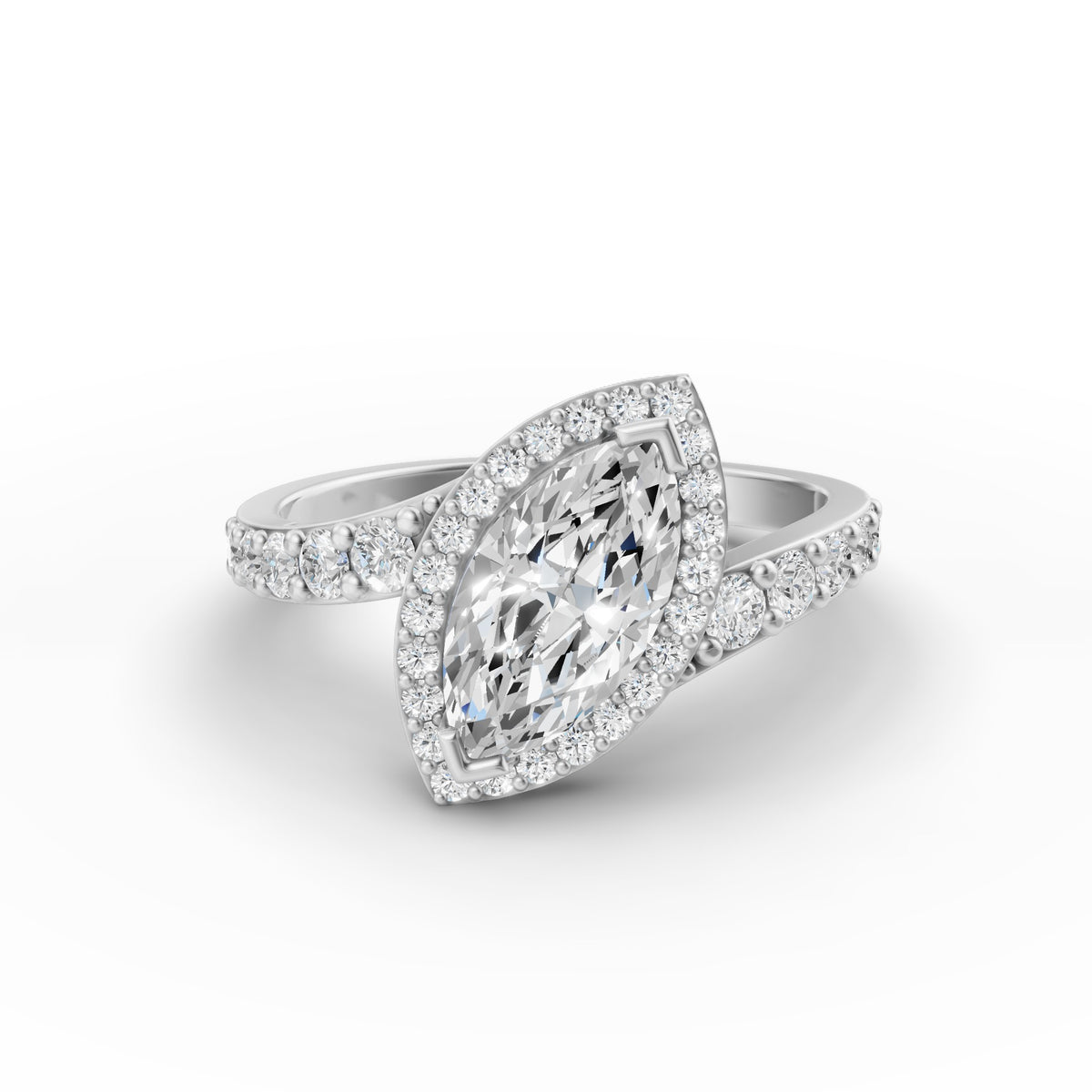
Marquise Oblique Halo Engagement Ring | Lab-Grown Diamond
Regular price From Rs. 66,595Regular price -
Tulip-Setting Marquise Solitaire Engagement Ring | Lab-Grown Diamond
Regular price From Rs. 94,042Regular price -
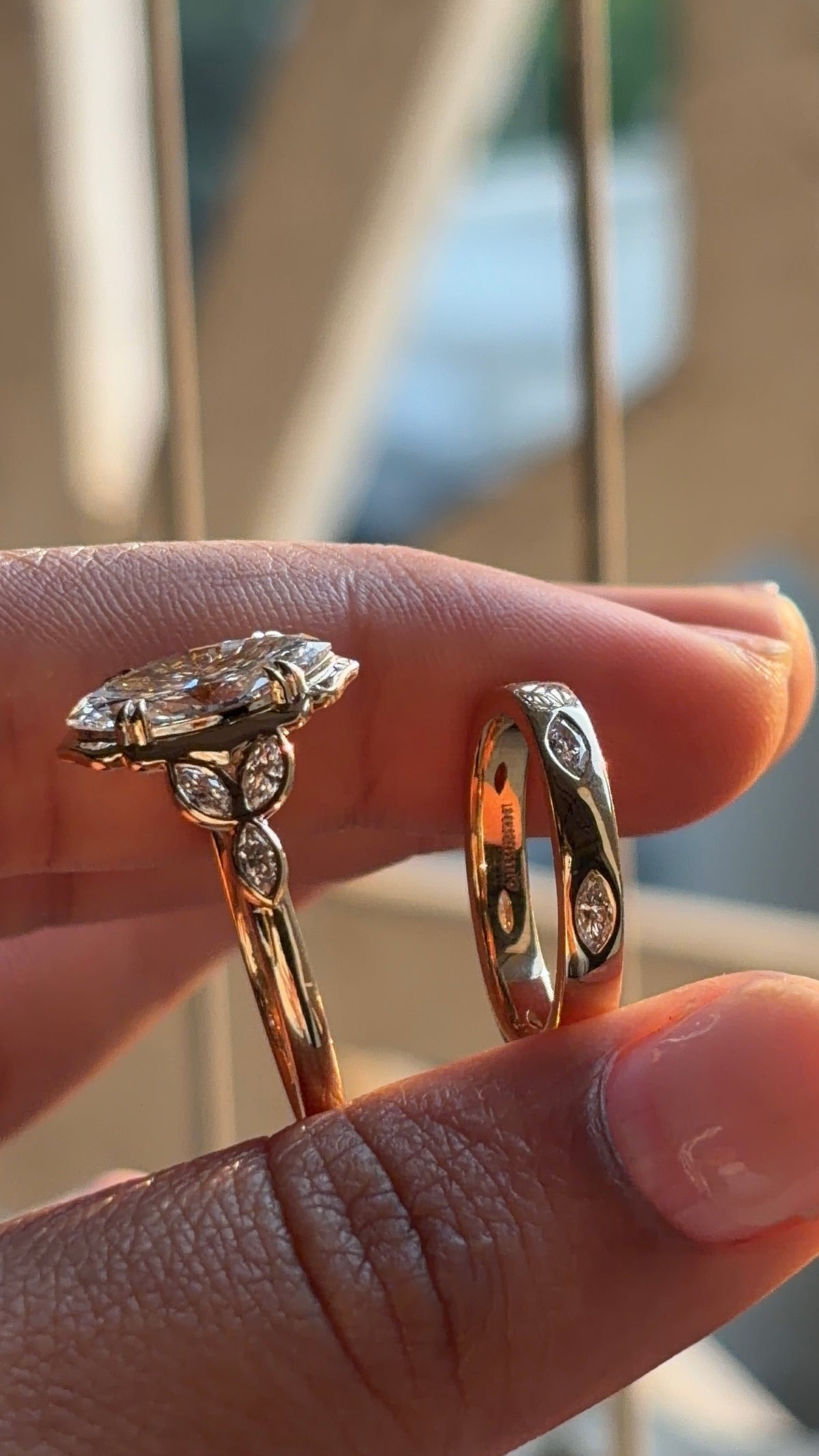
Bezel Marquise Stack Ring
Regular price From Rs. 46,187Regular price -
Anarkali Brilliant-Cut Dutch Marquise Engagement Ring | Lab-Grown Diamond
Regular price From Rs. 123,138Regular price -

-
Dual Marquise Stack Engagement Ring
Regular price From Rs. 111,232Regular price -
Zareen Marquise Ring | Lab-Grown Diamond
Regular price From Rs. 112,833Regular price -
Hexagonal Vintage Diamond Ring with Marquise Accents | Lab-Grown Diamond
Regular price From Rs. 108,494Regular price -
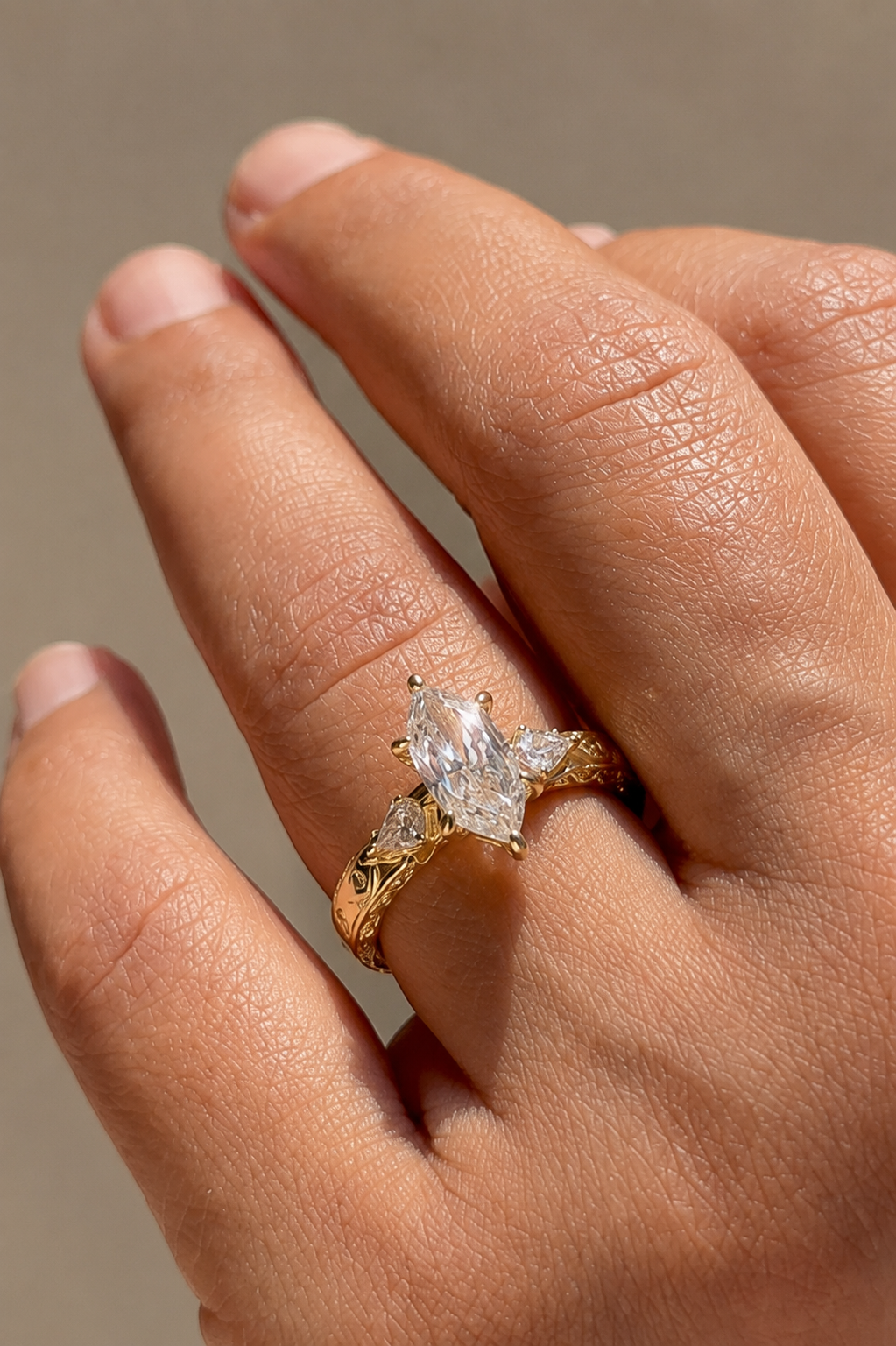
Marquise Vintage Vine Engagement Ring | Lab-Grown Diamond
Regular price From Rs. 67,430Regular price -
Lotus Marquise Floral Engagement Ring | Lab-Grown Diamond
Regular price From Rs. 85,937Regular price -
Marquise & Round Half Eternity Stack Ring | Lab-Grown Diamond
Regular price From Rs. 44,222Regular price -
Open Marquise & Round Stack Ring
Regular price From Rs. 51,139Regular price -
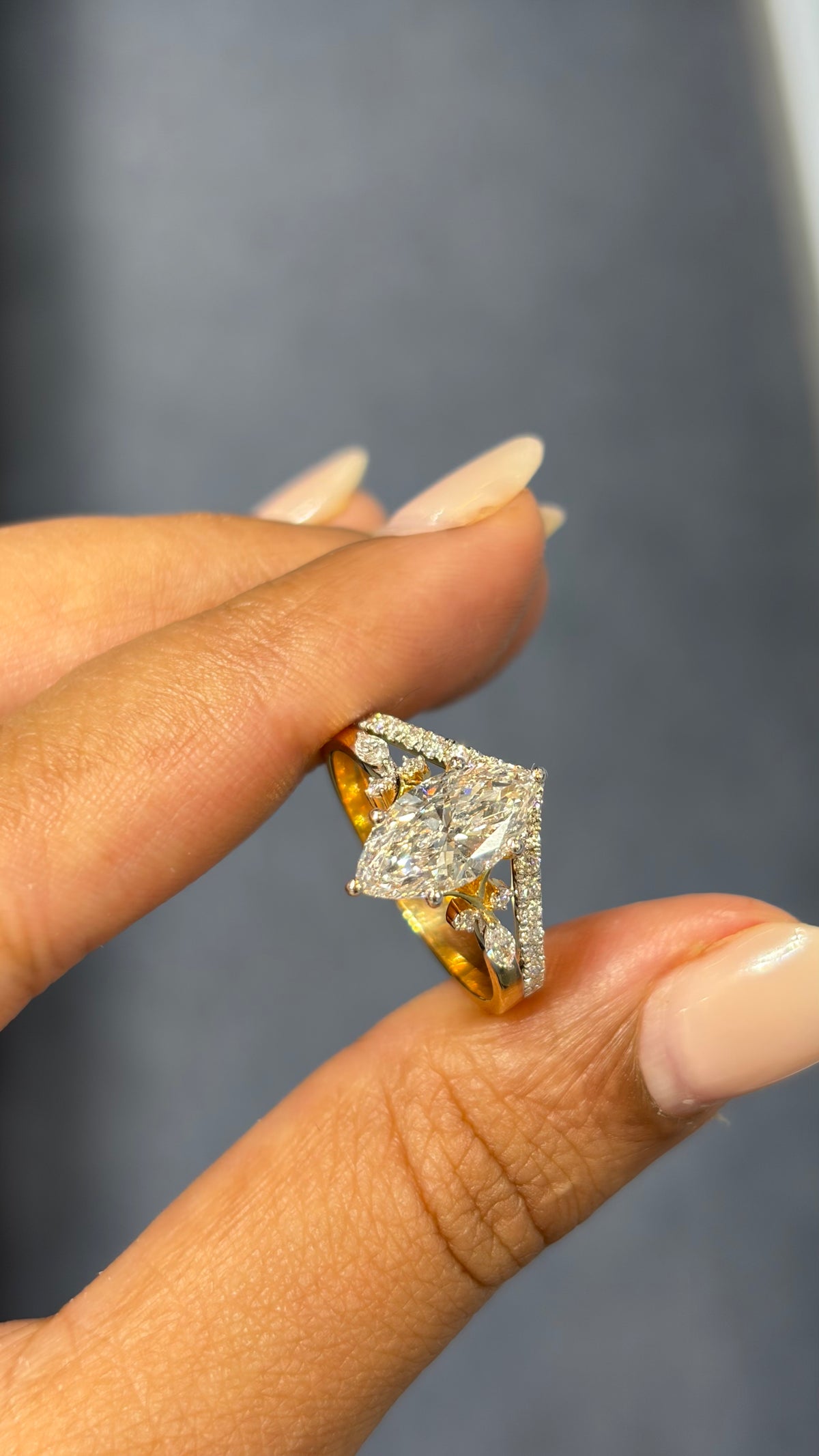
Marquise Flow Engagement Stack Ring | Lab-Grown Diamond
Regular price From Rs. 96,562Regular price







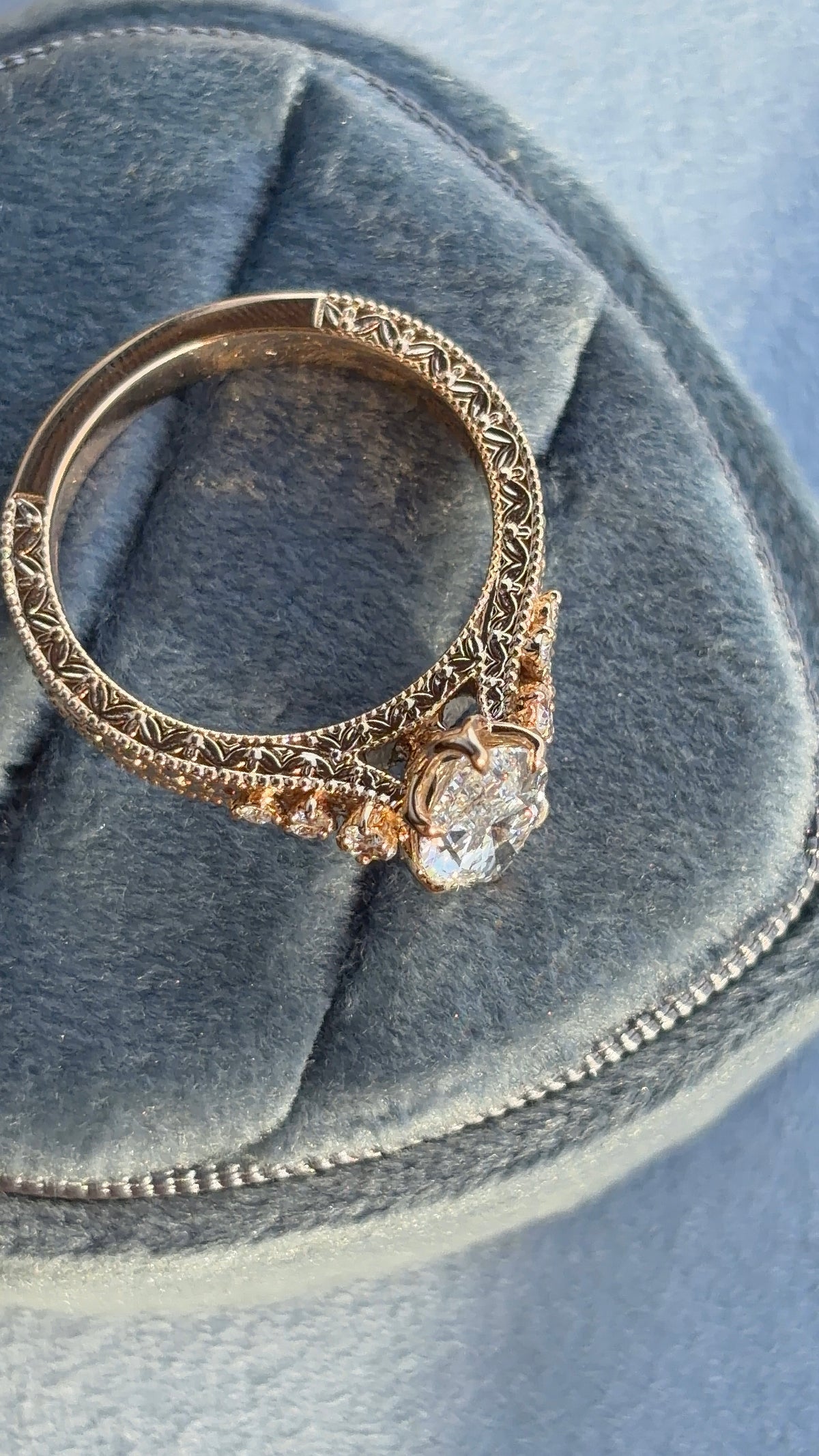


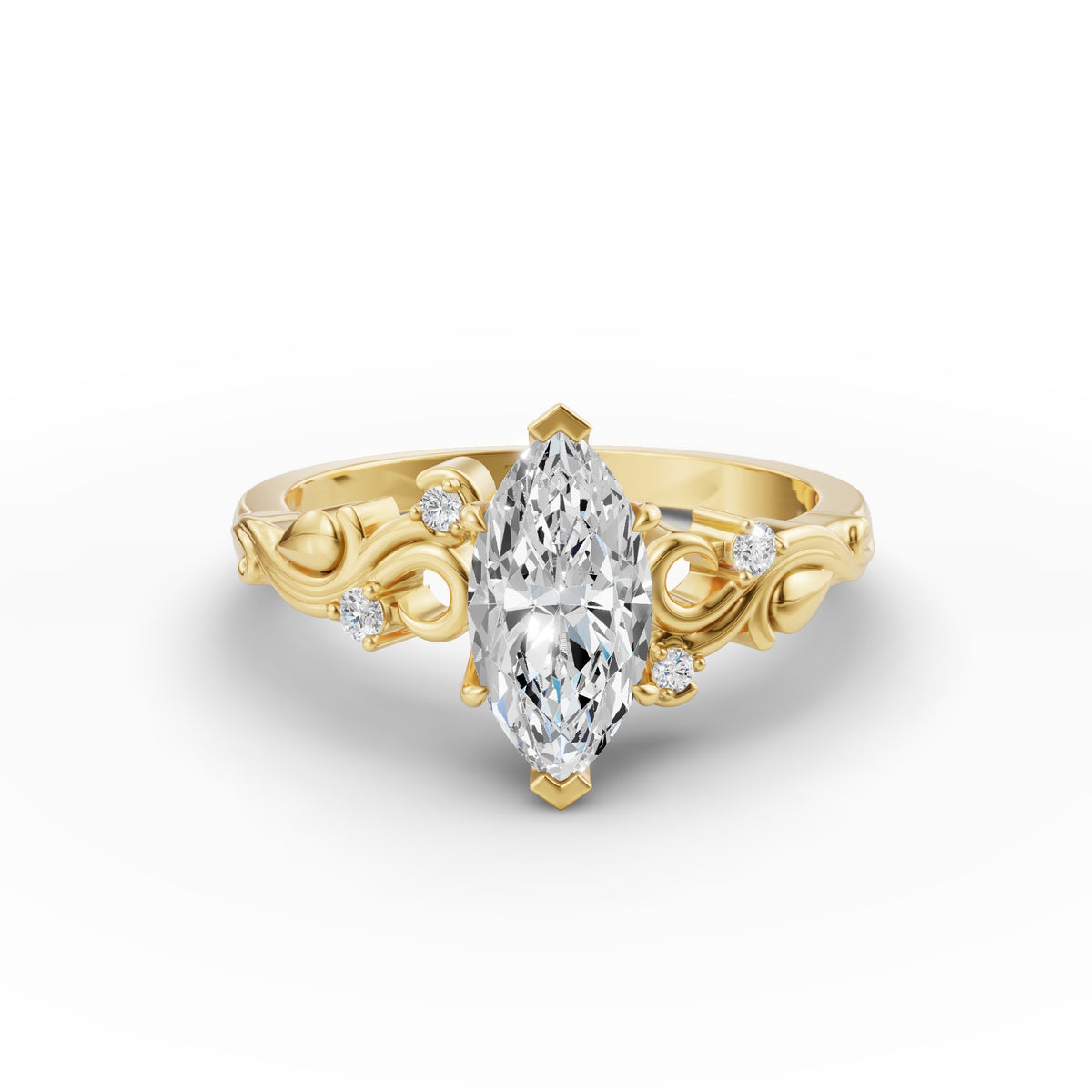

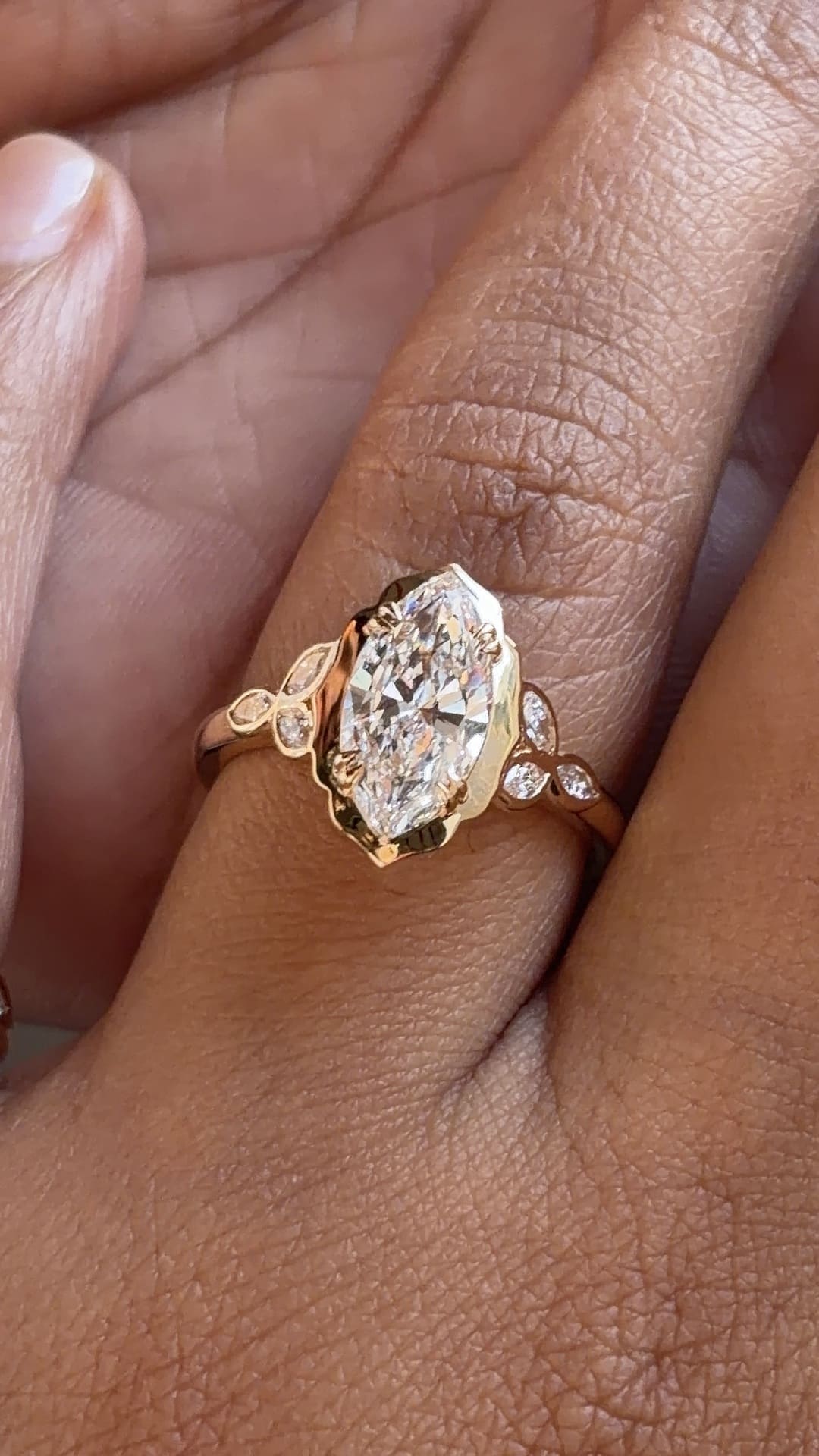

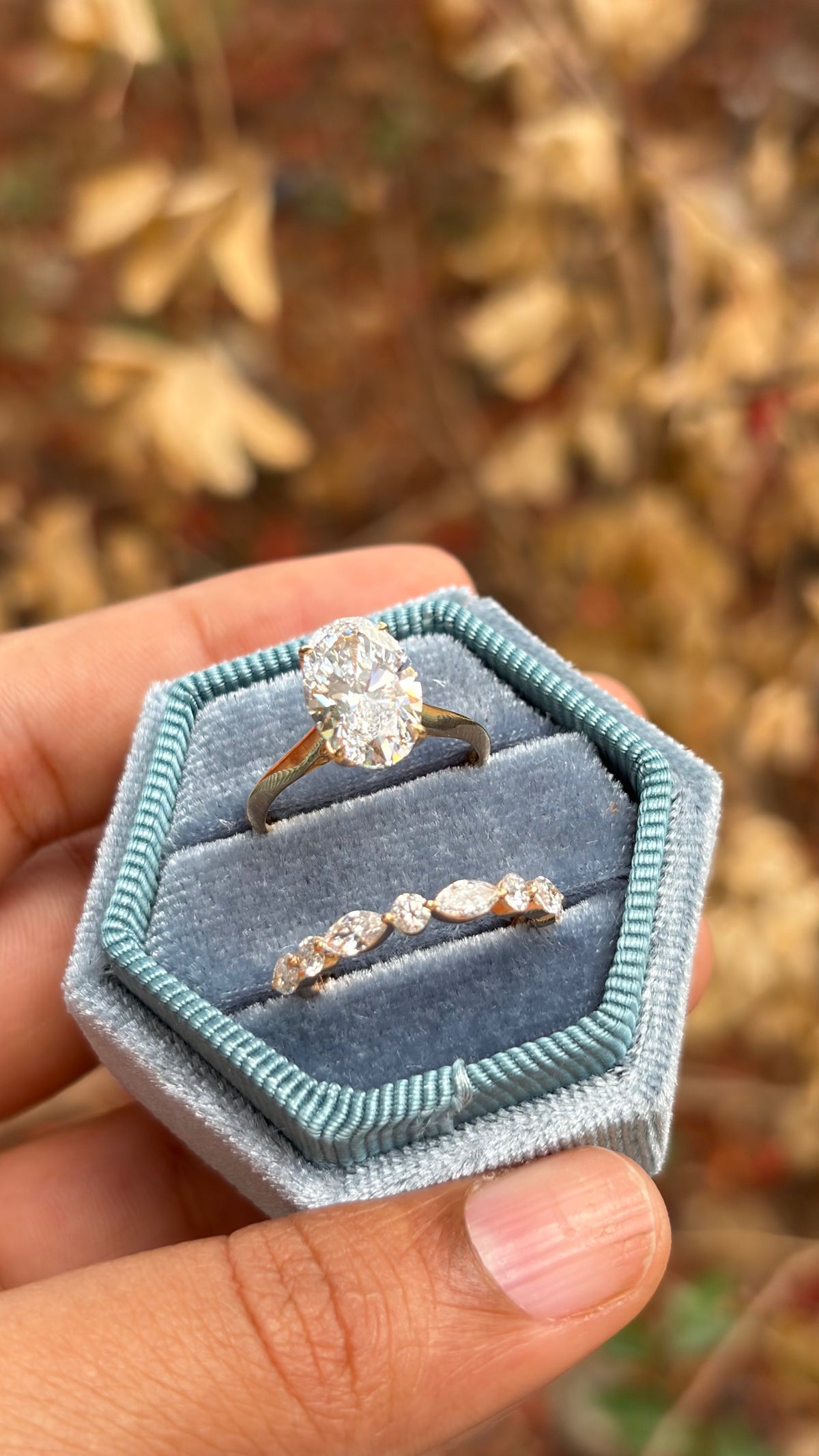


About Marquise Lab-Grown Diamond Engagement Rings — a buying guide
A 1.00 Ct marquise can measure over 10mm long. A 1.00 Ct round measures around 6.5mm. That is not a subtle difference — a marquise reads as a significantly larger stone at identical weight and identical cost.
It also has the strongest lengthening effect on the finger of any shape, which is why it has stayed in demand since the eighteenth century despite going in and out of fashion.
Two things separate a good marquise from a poor one, and neither appears on a certificate.
Symmetry. The two points must align on a single axis and the two halves must mirror each other. A marquise that is even slightly off will look crooked once it is on the finger, and no setting can hide it.
The bow-tie. Like the oval, every marquise has a dark band across the centre. In a well-proportioned stone it is faint. In a badly cut one it swallows the middle of the diamond. This has to be judged by eye.
The points of a marquise are its thinnest, most vulnerable areas. A marquise should always be set with V-prongs that cup and cover both tips, or in a bezel. This is not optional for a ring worn daily. Every marquise setting in this collection protects the points.
- Check symmetry with the stone facing you. Any tilt is permanent and obvious.
- V-prongs or bezel only. An unprotected point will chip.
- Length-to-width around 1.85 to 2.10 is the classic range. Shorter looks stubby; longer becomes fragile.
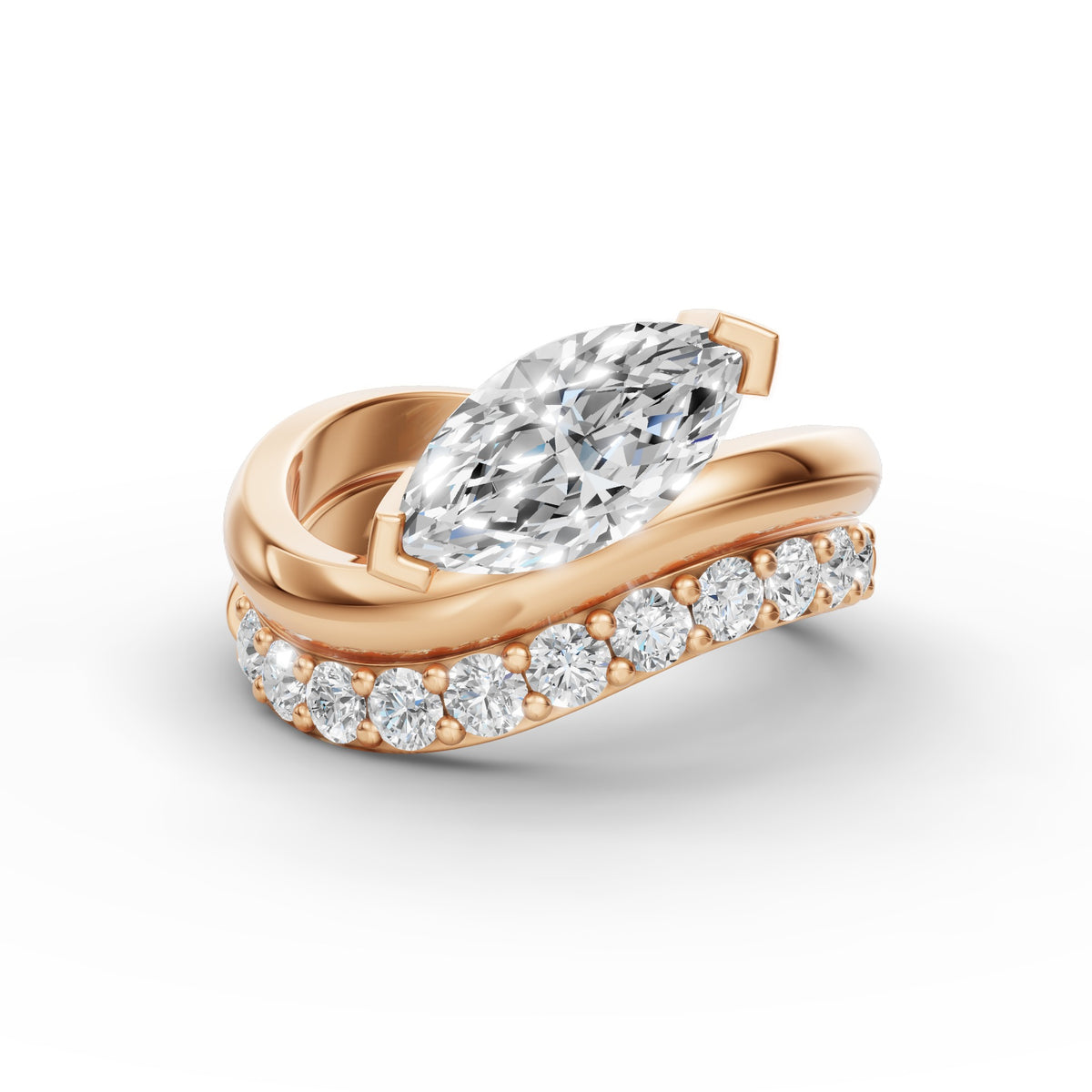
- East-west marquise settings are a genuine alternative. Set horizontally, the shape reads as contemporary rather than vintage.
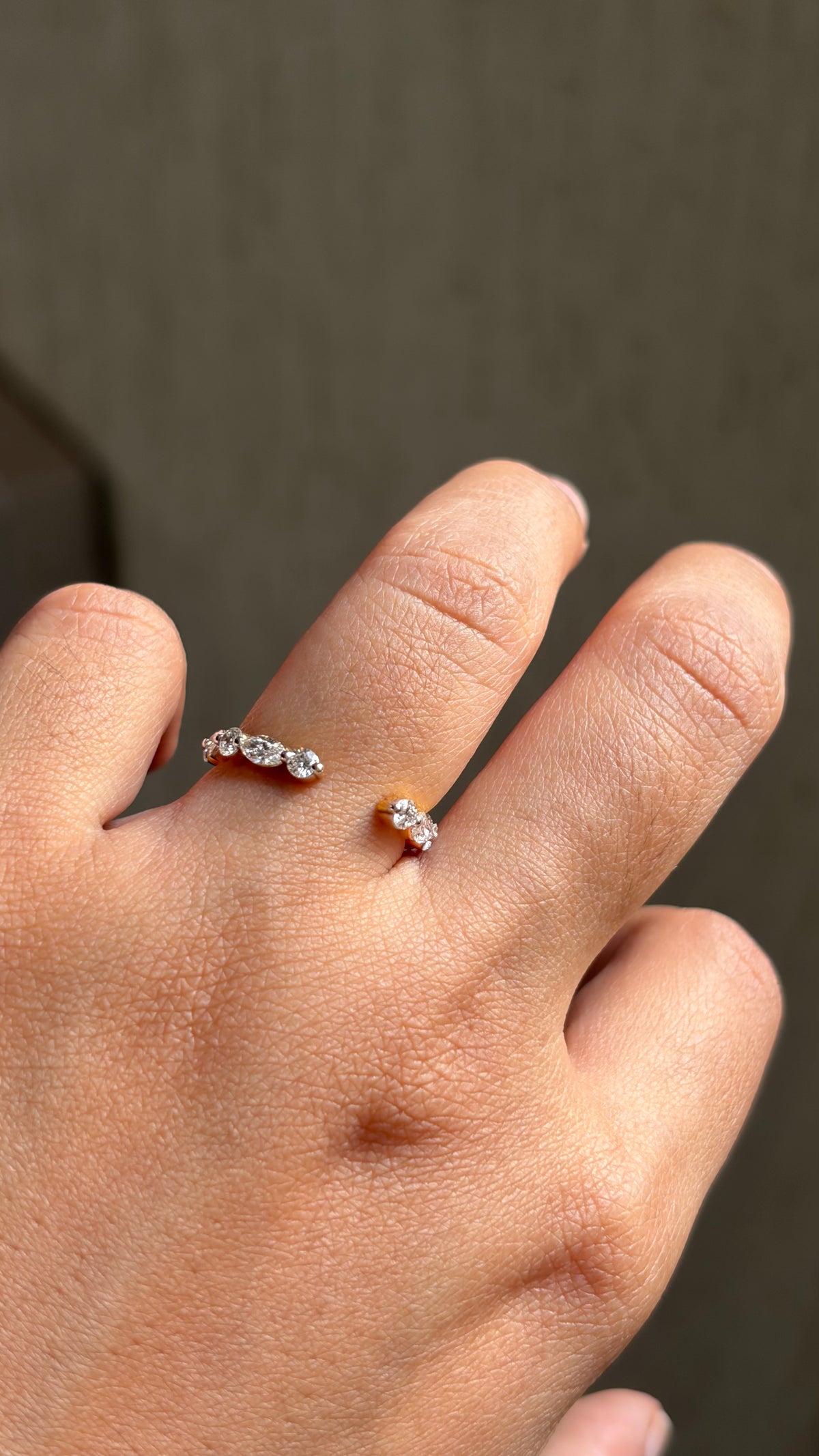
Sixteen marquise designs in 14K and 18K gold with IGI-certified lab-grown diamonds — solitaires, vintage vine settings, floral halos, tulip settings, east-west orientations and toi et moi pairings.
Every ring ships with its certificate, insured worldwide delivery, lifetime exchange and free resizing. Custom work takes two to five weeks. Visit our studio in Borivali West, Mumbai, or book a free virtual consultation.


